Block Order
A block or cross is a large negotiated or crossed options execution. Its premium and execution structure add context, but do not establish directional conviction or identify the participant.
More Details
What is an options block trade?
A block is a large options execution, often negotiated or crossed. Its size makes it visible on a premium-ranked feed, but the public tape does not establish whether it opens a position, closes one, forms a hedge or belongs to a larger structure.
Explore the product: Options Flow Features | How to Read Options Flow
Block trades versus sweeps
| Execution type | What to examine | What it does not prove |
|---|---|---|
| Block or cross | Negotiated or crossed execution and package structure | Strong or weak conviction |
| Sweep | Rapid routing across multiple exchanges | Informed or correct trading |
| Split | Executions worked in pieces | A new position being accumulated |
Read block activity in context
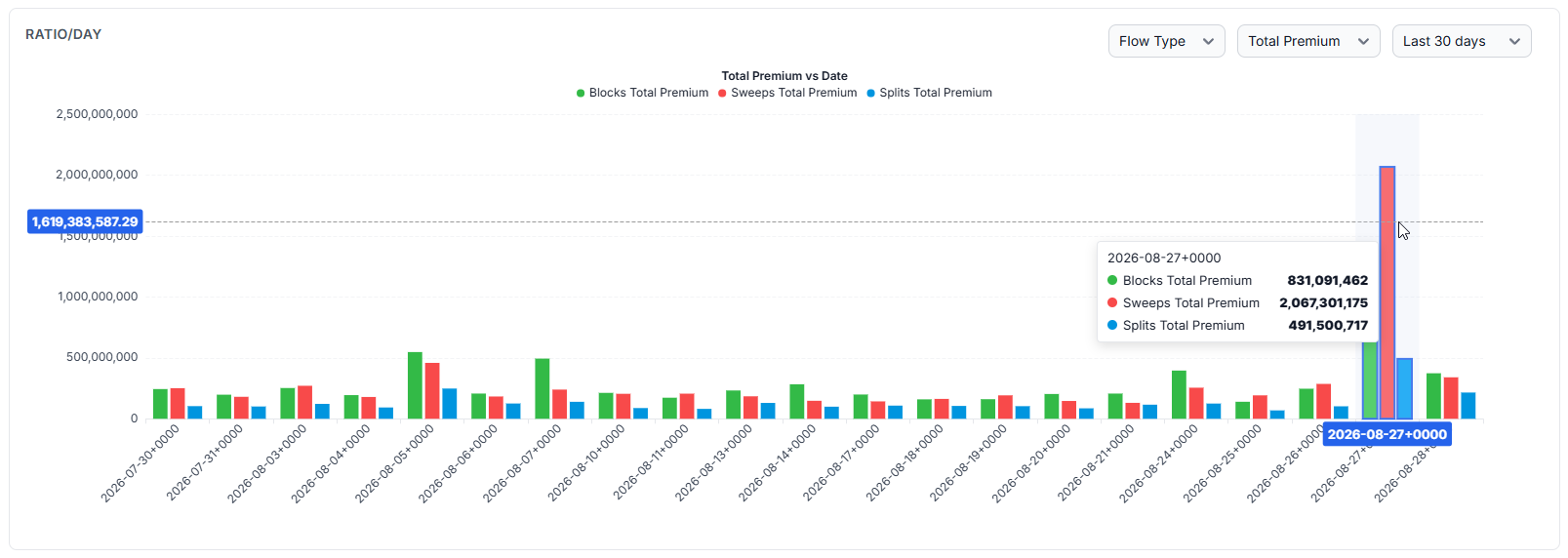
In the guide's historical market example, block and negotiated premium represented 36.2% of the session against a usual 26.9%. That changes how the headline premium should be read: negotiated turnover is not the same observation as aggressive open-market demand.
Use the Market tab's execution mix and the symbol's daily block/sweep/split breakdown to compare the session with its baseline. Then inspect the underlying orders.
Check the complete order
Enable multi-leg grouping in the flow table. Read leg count, gross and signed net premium together, and expand the package. A large call print can be part of a spread or a roll; the execution label alone cannot settle that question.
Where to find it in TradesViz
Example
In the guide's example, block/negotiated premium was 36.2% of the session versus 26.9% normally, a 9.3 percentage-point difference.